
How to Prevent Scope Creep in Your Projects


Published: 12 June 2026 | Last reviewed: 12 June 2026
Scope creep is one of the most familiar frustrations in project management, and one of the most expensive. It rarely arrives as a single dramatic event. Instead, it builds gradually: an extra feature requested here, a slightly expanded deliverable there, until the finished project barely resembles the one that was agreed at the outset.
For small- and medium-sized businesses, where budgets are tight and teams often cover several roles at once, scope creep can turn a profitable project into a loss-making one within weeks. It delays other work, increases pressure on staff, and can damage client relationships when expectations are not managed properly.
The good news is that scope creep is largely preventable. With a clear project brief, an agreed baseline and a simple change control process, businesses of any size can keep projects on track and protect both their margins and their reputation. This article explains why scope creep happens, the real costs involved, and the practical steps that help prevent it.
What Is Scope Creep and Why Does It Happen?
Scope creep refers to the gradual, often informal expansion of a project's scope beyond what was originally agreed, without a corresponding adjustment to the budget, timeline or resources allocated to deliver it. It is different from a legitimate scope change, which is proposed, assessed for its impact and formally approved before any extra work begins.
Scope creep tends to happen for a handful of recurring reasons:
A project brief that is too vague to define clear boundaries for what is, and is not, included
Stakeholders making informal requests directly to team members, outside any agreed process
No process in place for assessing how a new request affects time, cost or resources
A natural desire to keep clients or senior managers happy by agreeing to small additions
An assumption that minor changes are too small to matter, even though they accumulate
Teams losing sight of the original objectives as a project progresses over weeks or months
None of these causes point to bad intentions. Scope creep is rarely the result of a single poor decision. It is the cumulative effect of many small, reasonable-sounding requests that are accepted without anyone weighing their effect on budget, timeline or resources.
A simple example illustrates how this happens.
A web design agency agrees to build a five-page website for a fixed fee. Midway through the project, the client asks for two extra landing pages, a CRM integration and some branding adjustments, each framed as a small addition “while the team is already working on the site”. Individually, none of these requests seems significant. Together, they add several weeks of unbudgeted work. Without a formal change process, the agency either absorbs the cost itself or delays other clients to keep up.
The Real Cost of Scope Creep for SMEs
For larger organisations, scope creep is an inconvenience that erodes profit on individual projects. For SMEs, the impact can be far more serious, because there is often less financial buffer to absorb the extra cost and fewer staff available to cover additional work.
The table below summarises some of the most common impacts.
Impact | What This Looks Like in Practice |
Budget overruns | Unbudgeted work erodes profit margins, sometimes turning a profitable project into a loss |
Schedule delays | Extra tasks push back completion dates, which can delay the start of the next project and affect cash flow |
Team pressure | Staff are expected to absorb additional work within the same timeframe, increasing the risk of burnout and errors |
Client disputes | Disagreements arise over what was included in the original agreement, complicating invoicing and damaging trust |
Reduced quality | Work is rushed to compensate for the extra scope, increasing the likelihood of mistakes and rework |
These costs are rarely visible until a project is well underway, which is why prevention, rather than correction, is the most effective approach.
Warning Signs You Are Experiencing Scope Creep
Scope creep is easier to manage when it is caught early.
The following signs often indicate that a project's scope is expanding without proper oversight:
Tasks appear on the to-do list that were never part of the original brief or plan
Deadlines slip without anyone formally reviewing the schedule or raising a change request
The budget is being used more quickly than the project's progress would suggest
Team members are unsure what “finished” actually looks like for the project
Requests for “just one more thing” become a regular occurrence from clients or stakeholders
The original objectives are difficult for the team to recall or describe clearly
If several of these signs are present, it is worth pausing to review the project against its original brief and baseline before further work is agreed.
How to Prevent Scope Creep in Your Projects
Preventing scope creep does not mean refusing every new idea or request. It means having a structure in place that allows new requests to be considered properly.
This way, any changes to scope become deliberate decisions rather than accidental drift. The following strategies form the foundation of effective scope management.
Start with a Clear, Detailed Project Brief
A strong project brief is the first and most important defence against scope creep. It should set out the project's objectives, the specific deliverables that will be produced, what is explicitly excluded, the timeline, the budget and the criteria that will be used to judge success.
Importantly, a good brief states what is out of scope as clearly as what is in scope. This gives the team and stakeholders a shared reference point to return to whenever a new request is raised. Without this, there is no baseline against which to judge whether something represents a change at all.
Once written, the brief should be signed off by the project sponsor and shared with everyone involved, so that there is no ambiguity about what has been agreed.
Agree and Document a Project Baseline
The baseline is the approved version of the project's scope, schedule and budget at the point work begins. It becomes the fixed point of comparison for everything that follows. When a new request comes in, it can be assessed against the baseline to determine whether it represents additional work, and if so, what impact it will have.
Without a documented baseline, it becomes very difficult to demonstrate that a project has grown beyond its original agreement, because there is nothing to compare it against. A Gantt chart that records the original planned dates alongside actual progress is a simple and effective way to keep the baseline visible throughout the project.
Put a Formal Change Control Process in Place
A change control process does not need to be bureaucratic to be effective.
At its simplest, it should include:
A consistent way for anyone to raise a proposed change, in writing rather than informally
An assessment of how the change would affect the timeline, budget, resources and quality
A decision point, where someone with the appropriate authority approves, rejects or defers the request
A record of the decision and its rationale, so the change is documented for future reference
The purpose of this process is not to slow things down or say no by default. It ensures that when scope needs to change, because requirements evolve or new information comes to light, the change is made consciously and with a clear understanding of its consequences.
Maintain a RAID Log and Risk Register
A RAID log (Risks, Assumptions, Issues and Decisions) and a risk register give the project team a single place to record anything that could affect scope, alongside the decisions made about it. When a stakeholder makes an informal request, logging it as an issue or a potential change, rather than simply actioning it, creates a natural pause for assessment.
This record becomes particularly valuable later in the project and during post-project reviews, when teams can assess why certain decisions were made and whether the original assumptions held true.
Communicate Regularly with Stakeholders
Many scope creep requests come from a genuine, and often reasonable, change in a stakeholder's expectations as a project develops. Regular, structured communication, such as short status updates or review meetings, gives stakeholders an appropriate channel for raising new ideas, rather than approaching individual team members directly.
A clear kick-off meeting at the start of the project, where roles, expectations and the change process itself are explained, also sets the tone for how requests should be handled throughout.
Track Progress Against Milestones
Milestones provide regular checkpoints at which progress can be compared against the plan. If a milestone is missed, or only partially achieved, this is often an early signal that additional, unplanned work has crept into the schedule. Reviewing milestones alongside the project's critical path helps identify where extra tasks have been absorbed without formal agreement, before they cause significant delays.
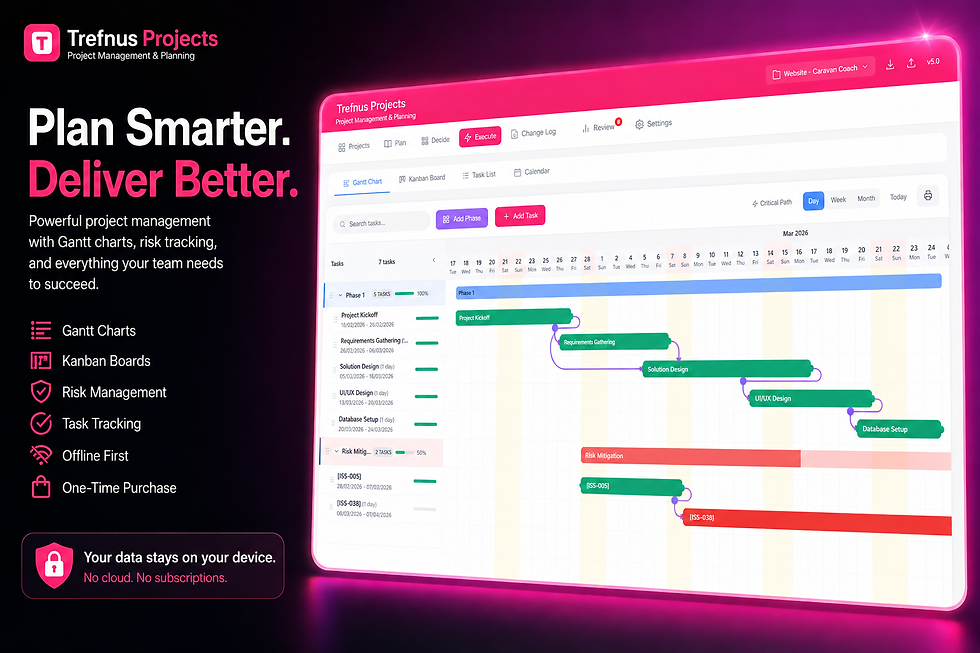
Keeping a project brief, baseline, change log and RAID log up to date across a busy project can become difficult using spreadsheets and email alone. Trefnus Projects brings these elements together in one place, with a Brief View for the agreed scope, a Gantt chart that tracks planned dates against actual progress, and a changelog that records issues and decisions as they happen. Explore Trefnus at: |

How Project Management Software Helps Keep Scope Under Control
Spreadsheets and email threads can work for very small projects, but they make it difficult to maintain a single, shared view of scope as a project grows or as more people become involved. Project management software addresses this in several ways.
A centralised brief and baseline mean that everyone working on the project, including new team members who join partway through, can see exactly what was originally agreed. A changelog or decisions log creates a running record of every request, discussion and decision, removing the reliance on memory or scattered email chains.
Visual tools such as Gantt charts make it straightforward to compare the original planned schedule against actual progress, highlighting where extra work has extended timelines. Kanban boards give everyone visibility of what is currently in progress, which can help surface unplanned tasks before they become embedded in the workflow.
Where a proposed change needs to be evaluated against several criteria, such as cost, time and strategic value, a simple decision matrix can support a more objective discussion than an informal conversation alone.
None of these tools replace good judgement or clear communication. What they do is make the existing scope, and any proposed changes to it, visible and easy to refer back to, which is often all that is needed to keep a project under control.
Building a Team Culture That Resists Scope Creep
Processes and software help, but culture matters just as much. Teams that feel able to raise concerns about scope, without worrying that doing so will be seen as unhelpful or obstructive, are far better placed to flag creeping changes early.
This starts with leadership. When project sponsors and managers consistently route new requests through the agreed change process themselves, rather than making informal exceptions, it sets a clear expectation for everyone else. Taking time at the end of a project, or at key milestones, to review what additional work was absorbed and why, also helps teams learn from experience and refine their brief writing and change control processes for future projects.
Frequently Asked Questions
What is the difference between scope creep and a scope change?
A scope change is a deliberate, agreed adjustment to a project's objectives, deliverables, timeline or budget, made through a formal process and with the impact assessed in advance. Scope creep is the accumulation of small, often informal additions to a project's work that happen without this assessment, so their combined effect on cost and schedule goes unrecognised until it becomes a problem.
How can a small business say no to extra requests without damaging a client relationship?
The key is rarely to say no outright, but to make the impact of the request visible. Explaining that a new request can be accommodated, but will affect the timeline, budget or another deliverable, allows the client to make an informed choice. Most clients respond well to this kind of transparency, particularly when it is delivered as part of a routine change process rather than as a one-off objection.
Is scope creep always a bad thing?
Not necessarily. Projects often benefit from incorporating new information or improved ideas as they progress. The issue is not change itself, but unmanaged change. When additional work is assessed, agreed and reflected in an updated timeline and budget, it becomes a legitimate scope change rather than scope creep, and the project can adapt without losing control.
What should a basic change control process include?
At minimum, a change control process should provide a consistent way to submit change requests, a step to assess their impact on time, cost, resources and quality, a clear decision point with appropriate authority, and a record of the outcome. For most SMEs, this can be achieved with a simple shared log rather than complex documentation.
How does a project baseline help control scope?
A baseline records the approved scope, schedule and budget at the start of a project, giving a fixed point of reference. Any new request can be compared against this baseline to determine whether it represents additional work and, if so, how much. Without a baseline, there is no consistent way to demonstrate that a project has grown beyond what was originally agreed.
What tools can help manage scope creep?
A combination of a clear project brief, a documented baseline, a change log and regular progress tracking against milestones covers most of what is needed. Project management software can bring these elements together in one place, making it easier to maintain a shared, up-to-date view of scope across a team, particularly as projects grow in size or complexity.
Further Reading and Official Guidance
Association for Project Management (APM): APM Body of Knowledge - guidance on scope management within the wider project management lifecycle
Axelos: PRINCE2 project management method - includes the change control approach used widely across UK projects
Project Management Institute: PMBOK Guide - international standards covering scope, schedule and cost management
ISO 21502:2020 Project, programme and portfolio management - international standard providing guidance on project management practice
Conclusion
Scope creep is one of the most common reasons projects run over time and over budget, but it is rarely caused by a single dramatic decision. It builds gradually, through informal requests, vague briefs and a lack of clear reference points against which to judge change.
The strategies set out in this article, a clear brief, an agreed baseline, a simple change control process and regular communication with stakeholders, address the root causes rather than the symptoms. None of them require significant time or expense to put in place, and the benefits, in terms of protected margins, met deadlines and stronger client relationships, are significant.
For businesses managing multiple projects, bringing these elements together in a single tool, such as Trefnus Projects, can make it considerably easier to keep scope visible and under control from start to finish.
Disclaimer
The information in this article is intended for general guidance only and does not constitute professional legal, financial or regulatory advice. Always consult a qualified professional for advice specific to your circumstances.


